
Defence Minister Rajnath Singh has called for India to become a global leader in advanced technologies, particularly in strengthening its non-destructive testing (NDT) ecosystem. He emphasised the need for indigenous capabilities, consistent quality assurance, and the integration of advanced digital technologies like AI and ML to ensure reliability and self-reliance in defence applications.
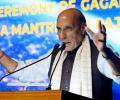
Defence Minister Rajnath Singh has urged India to become a global leader in advanced technologies, particularly in non-destructive testing (NDT), to bolster self-reliance and defence preparedness. He highlighted the critical need for indigenous capabilities in inspection technologies, quality assurance, and reliable testing results for strategic applications, emphasising that NDT is vital for ensuring the integrity of defence systems without causing damage.

IG Defence is establishing a 200-acre missile development and manufacturing complex in Nellore, Andhra Pradesh, focusing on indigenous micro-missile systems, propulsion technologies, and precision-strike capabilities, including the JWALA surface-to-air micro-missile system.

An Indian defence engineering company, Paras Defence and Space Technologies, has partnered with US-based BroadPak Corporation to accelerate the development of advanced semiconductor packaging capabilities in India. This collaboration aims to establish a facility for heterogeneous integration and 3D packaging, focusing on critical technologies for AI, high-performance computing, and defence applications.

India's Indo-Pacific approach has traditionally emphasised strategic autonomy, ASEAN centrality, freedom of navigation, respect for international law and an inclusive regional order. Its growing defence and maritime partnerships with Australia, Japan, Indonesia, Vietnam and other Southeast Asian countries provide additional depth to this approach, point out Dr Kumar and Dr Jasmeet Kaur.

US Secretary of State Marco Rubio kick-started a three-day visit to India on Tuesday to advance bilateral ties in energy, trade and investment, defence, critical technologies, and exchange views on the West Asia crisis.

India aims to become a globally competitive and technologically self-reliant semiconductor powerhouse by 2047, leading in next-generation chip technologies. This vision, highlighted at the ESTIC 2026 conclave where DRDO played a key role, focuses on developing a sustainable semiconductor ecosystem, creating high-value jobs, and ensuring digital security and economic strength through indigenous chip capabilities.

Japan is deepening its defence relationship with India while simultaneously expanding its economic, infrastructure and security engagement with countries around India -- particularly Bangladesh. The result is an emerging Japanese conception of South Asia in which India remains the strategic anchor, but the geography surrounding India is becoming increasingly important, points out Varun Arya.
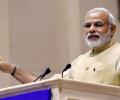
Prime Minister Narendra Modi, in his Independence Day address, highlighted technology and innovation as central to India's goal of becoming a developed nation by 2047. He called for India to lead in emerging technologies like AI, quantum computing, and space, announcing a massive AI skilling initiative for one crore youth. Modi stressed the importance of becoming a global innovation hub, bolstering energy security with nuclear power, and strengthening cybersecurity.
Drogo Aerospace's JK 250e fixed-wing VTOL UAV has received type certification from the DGCA on Thursday. This UAV, designed for the Indian armed forces' ISR needs, combines fixed-wing efficiency with VTOL capability and has an endurance of two to three hours. The certification is crucial for indigenous UAV technology development and operator training.

'The political leadership is very clear that we have to move towards the integration of the three services into theatre commands.'

India's AI startups have the money to run their models, but a shortage of GPUs is delaying projects, increasing costs and limiting growth.
Collins Aerospace, a subsidiary of RTX Corporation, has commenced work on a new propeller maintenance, repair, and overhaul (MRO) facility in Bengaluru. This facility, set to be operational by early 2029, will be the first of its kind in India authorised by a foreign aerospace OEM. It aims to support regional turboprop aircraft and military transport platforms across the Asia-Pacific region, strengthening India's aviation ecosystem.

The CBI has arrested Anil Kumar, a senior executive at Munitions India Limited (MIL), for allegedly taking bribes and disclosing sensitive defence information related to a Rs 500 crore supply contract. The FIR also names SMPP CEO Ashish Kansal. Kumar is accused of routing illicit proceeds through family members, compromising national security.

Built as an expendable, short-duration turbojet engine for single-mission applications, it can power tactical cruise missiles, anti-ship missiles, and long-range loitering munitions.

'India is trying to project that it can engage with the world in a different way too.'

Prime Minister Narendra Modi creatively used the popular video game Grand Theft Auto (GTA) to illustrate India's remarkable transformation from a "fragile five" economy to the world's fastest-growing nation, highlighting significant advancements in various sectors over the last 12 years.
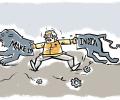
RRP Electronics and Orvis Semi Pvt Ltd have formed a strategic partnership to develop and manufacture low-light imaging sensors for defence, surveillance, and security in India. This collaboration aims to reduce reliance on imports and bolster India's semiconductor and defence electronics ecosystem under government initiatives like Make in India.

IBM Chairman and CEO Arvind Krishna details the company's substantial annual investment in India and its global USD 10 billion commitment to quantum computing over the next five years. He addresses the potential for AI to displace 10-20 per cent of jobs, particularly in the BPO sector, while also highlighting India's significant opportunity in the AI ecosystem. Krishna urges India to accelerate AI adoption, scale existing tech initiatives, and build its semiconductor manufacturing, advocating for a light-touch approach to AI regulation and emphasizing critical thinking in an AI-driven economy.

Former US Secretary of State Antony Blinken stated that the US must respect India's right to self-defence and maintain a zero-tolerance policy towards terrorism, highlighting the "fundamentally different" nature of Washington's relationships with New Delhi and Islamabad. He described US-India ties as global and strategic, while US-Pakistan relations are regional. Blinken also touched upon cooperation in emerging technologies, India's ties with Russia, rapid global changes, US domestic politics, and the West Asia conflict, advocating for a two-state solution.

Air Chief Marshal A P Singh, the IAF chief, has strongly advocated for India to achieve greater self-reliance in unmanned aerial systems and other critical defence technologies, stating, "Technology delayed is technology denied." He stressed the importance of indigenous development to avoid dependency on other countries for components.
India has launched three indigenous AI foundation models, EKA-1, Dhir 2B, and Dhir 5B, under the IndiaAI Mission. Developed by Soket Labs Technology and Research and ZenteiQ AiTech Innovations, these models aim to enhance India's technological and strategic autonomy in artificial intelligence, offering solutions for various sectors including banking, cybersecurity, defence, and government services, with a focus on Indian languages and offline capabilities.
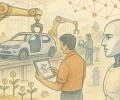
Indian companies showcased their quadruped robots at the Bengaluru Tech Summit, with General Autonomy's Param winning a race. The event highlighted India's growing capabilities in robotics and Physical AI, with robots designed for defence, industrial surveillance, and security applications.

A dozen companies, including major players like Jio Platforms and Zetwerk Manufacturing Business, are poised to launch Initial Public Offerings (IPOs) in October, continuing India's strong fundraising momentum in the primary market. These offerings span diverse sectors, reflecting sustained investor interest in businesses with robust growth prospects.

Chief of Defence Staff General NS Raja Subramani highlighted on Monday how artificial intelligence, satellite-based intelligence, and mass-produced drones are fundamentally altering modern warfare. He warned that the entire geographical expanse of a nation is now a potential battlefield, making everyone vulnerable. The CDS emphasised the changing economics of warfare, the growing contest for technological superiority, and the expansion of the battle space as key determinants of future conflicts.

The move is meant to enhance the operational capability of the armed forces, reduce import dependence and increase domestic value addition.

US President Donald Trump stated that the US and India are 'pretty close' to finalising a trade deal, which he expects to be significantly different from previous agreements. This announcement comes amidst ongoing discussions between officials from both nations, including Secretary of State Marco Rubio's visit to India and Commerce Minister Piyush Goyal's meetings with US Trade Representative Jamieson Greer, following an initial framework agreement in February.

BrahMos Aerospace CEO and MD Jaiteerth R Joshi announced that BrahMos missiles have been supplied to the Philippines and an agreement signed with Vietnam, with other Southeast Asian nations also showing interest. He highlighted the role of non-destructive testing (NDT) in ensuring the reliability of the missiles, especially after an unanticipated event like "Operation Sindoor." Joshi also briefed reporters on the upcoming 36th Annual Conference on Non-Destructive Evaluation and Enabling Technologies (NDE 2026) in Hyderabad, which will feature Defence Minister Rajnath Singh and significant business potential.

Prime Minister Narendra Modi addressed the ASEAN-India summit, advocating for a free, inclusive, and rules-based Indo-Pacific based on cooperation. He proposed nine initiatives, including a long-term maritime plan, free e-visas, and cooperation in civil nuclear energy, emphasizing India's commitment to ASEAN's unity and centrality amidst global uncertainties.
Hical Technologies and Safran Aerosystems have signed a Memorandum of Understanding to explore a joint venture for manufacturing complex systems, including fluid and fuel systems, for the Dassault Rafale program in India. This partnership aims to bolster the Make in India initiative, leveraging Hical's expanding manufacturing capabilities and Safran's technology leadership to produce critical aerospace components domestically and for global markets.

US Secretary of State Marco Rubio is on a three-day visit to India to discuss bilateral ties in energy, trade, investment, defence, and critical technologies, as well as the West Asia crisis. His visit aims to strengthen the India-US Comprehensive Global Strategic Partnership amidst existing friction, with a focus on finalising a proposed bilateral trade deal.

The reforms, undertaken by the Department of Defence Production, remove stakeholder consultation for exports of non-lethal defence items to most destinations, while retaining safeguards for sensitive countries.

Andhra Pradesh is developing a 25,000 crore space city near Sriharikota, aiming to create a robust ecosystem for private space technology startups and MSMEs, with major deals already signed for rocket engine manufacturing, testing, and R&D.
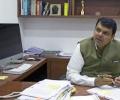
Maharashtra Chief Minister Devendra Fadnavis announced the state's ambition to become India's leader in quantum technology. The state plans to build a robust ecosystem, align with the National Quantum Mission, and train over 5,000 professionals, recognising AI, semiconductors, and quantum tech as key pillars for future growth and global competitiveness.

Drone technology company ideaForge Technology has successfully raised Rs 500 crore through a Qualified Institutional Placement (QIP). The funding, which saw strong interest from domestic and international institutional investors, will be used to accelerate innovation, expand its product portfolio into combat drones and autonomous systems, and strengthen its working capital to meet growing demand in defence, homeland security, and civil sectors.
Drone technology company ideaForge Technology has successfully raised Rs 500 crore through a Qualified Institutional Placement (QIP). The funding, which saw strong interest from domestic and international institutional investors, will be used to accelerate innovation, expand its product portfolio into combat drones and autonomous systems, and strengthen its working capital to meet growing demand in defence, homeland security, and civil sectors.

The Indian Air Force conducted a large-scale multinational Humanitarian Assistance and Disaster Relief (HADR) exercise, 'Sahayata Setu 2026', in Jamnagar, Gujarat. The drill showcased India's growing air power and disaster-response capabilities, involving various Indian agencies and representatives from 24 friendly foreign countries. Chief of Defence Staff General N S Raja Subramani highlighted India's commitment to human security and its role as a first responder in the Indian Ocean Region.

The Indian government has announced a significant overhaul of the Agnipath scheme, offering all Agniveers an additional two-year extension period and a subsequent pathway to permanent recruitment in the armed forces, subject to eligibility and consent.

India's Defence Ministry has sealed contracts worth Rs 53,866 crore with Garden Reach Shipbuilders and Engineers Ltd (GRSE) and Goa Shipyard Limited (GSL) for eight next-generation warships for the Indian Navy. These indigenously designed corvettes will bolster India's combat prowess in the Indian Ocean and support the 'Make-in-India' initiative, creating significant employment opportunities.

'India needs to create eight-nine million jobs annually to absorb the growth in the working-age population.' 'Failure to create productive jobs could squander the demographic advantage that we enjoy right now.'
